History
Gernika: The Bombing, Picasso's Guernica and the Tree of Gernika
Gernika-Lumo is an inland Basque town on the Gernika estuary, 33 km from Bilbao and 20 minutes by train from Bermeo. It is known around the world for two things. The first is the Tree of Gernika and the Casa de Juntas beside it, the meeting place of Bizkaia’s assemblies and the main symbol of Basque identity. The second is the bombing of 26 April 1937, when German and Italian aircraft destroyed most of the town on a market day, and which Picasso turned into Guernica.
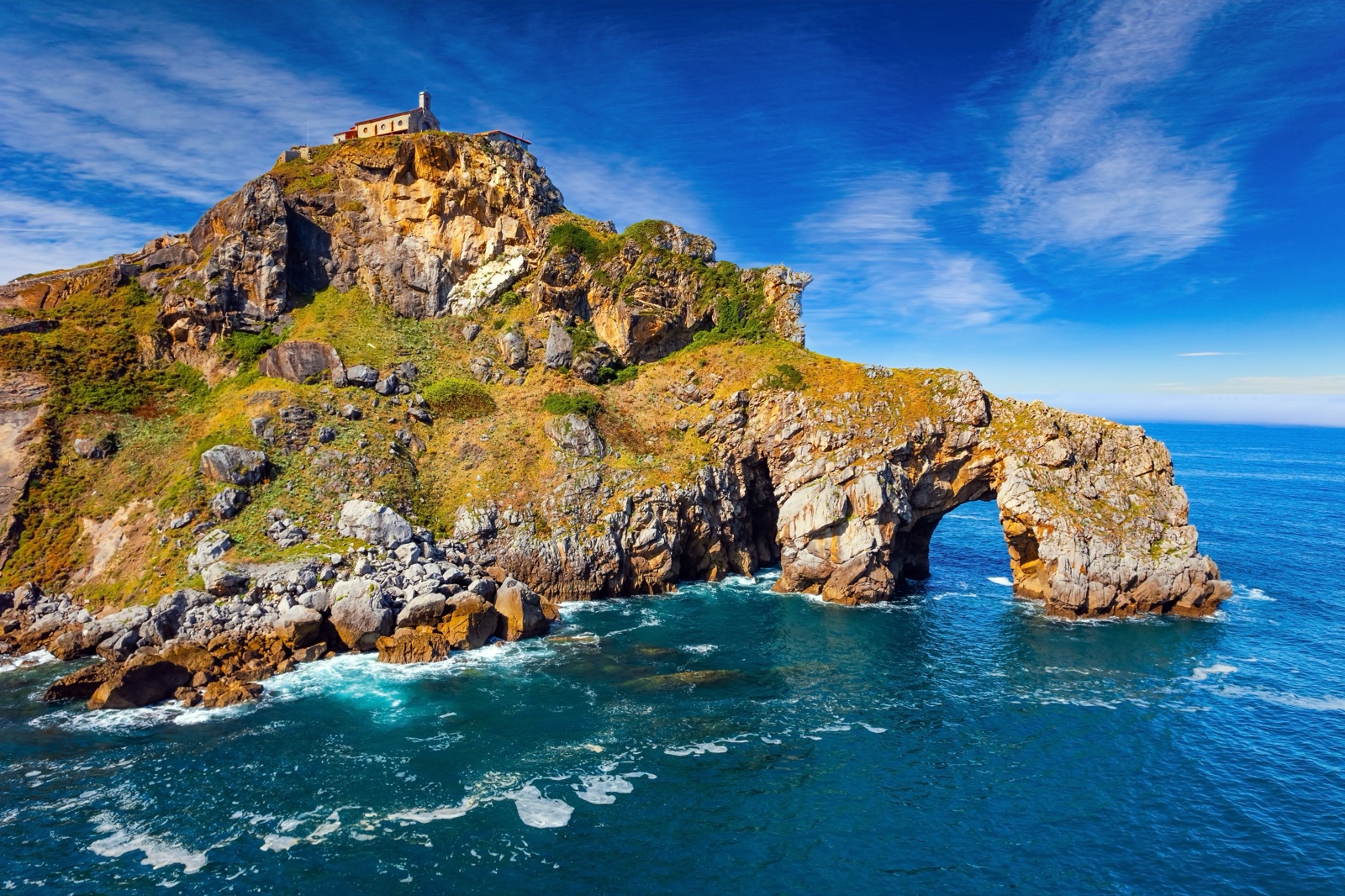
The painting itself is in Madrid, at the Reina Sofía museum; in Gernika you see a life-size tile reproduction on a street wall. What the town offers instead is the place itself: the Peace Museum, the air-raid shelters, the tree, and a Monday market with a charter going back to the fourteenth century. Gernika is not part of Gaztelugatxe, which is on the coast, but the two combine easily in a day from Bilbao. This guide covers the history, what to see and how to get there.
Gernika at a glance
- Where: inland on the Gernika estuary, in the Urdaibai reserve; 33 km from Bilbao and 105 km from San Sebastián.
- The bombing: 26 April 1937, a Monday and market day, from 16:20 to 19:40.
- The painting: Picasso’s Guernica is in the Reina Sofía in Madrid; Gernika has a life-size tile mural.
- The tree: the Tree of Gernika and the Casa de Juntas, free to visit.
- Best day: Monday, for the market.
- From Gaztelugatxe: via Bermeo, then 20 minutes by train.
The bombing of 26 April 1937
In March 1937, during the Spanish Civil War, the campaign in the north began, and on 31 March Durango was bombed, the start of a series of massive air raids. The authorities ordered shelters to be built.
26 April 1937 was a Monday, market day in Gernika, and the town was crowded: the Gernika tourist office estimates there must have been around 10,000 to 12,000 people there. According to the Gernika Peace Museum, the first bombs fell at 16:20. The bells of Santa María church had warned of the aircraft, and people ran to the shelters.
Most of the planes belonged to Germany’s Condor Legion; some were from Italy’s Aviazione Legionaria. They took off from airfields in Vitoria, Burgos and Soria. The tourist office points out that the plan of attack would be used elsewhere in Europe during the Second World War:
- Blast bombs first. The first bombs were 50 to 250 kg blast bombs designed to destroy buildings. They crashed through the roofs and left the timber of the houses exposed.
- Then incendiaries. Incendiary bombs of 1 to 2 kg followed, setting the town on fire.
- Fighters on the roads. Survivors trying to escape the centre were strafed by fighters diving to below 50 metres, which kept people inside the burning town.
The bombing ended at 19:40. Over more than three hours, between 31 and 41 tonnes of explosives were dropped, most of them incendiary bombs, and the fire could not be put out for several days.
The toll
The Peace Museum gives the result as 85.22% of the buildings destroyed and 99% of the town affected. The regime’s own Devastated Regions Service counted 271 buildings completely destroyed.
The number of dead is harder to establish, and you will see different figures. The Basque Government of the time recorded 1,654 deaths. Mayor José Labauria reported more than a thousand, including some 450 in the shelter on Calle Andra Mari. The rubble, more than 60,000 cubic metres of it, was not cleared from the centre until the end of 1941, and the Franco regime recorded no deaths and tried to eliminate the records compiled by the Basque authorities. Research to count and identify the victims continues.
How the world found out
The news reached the world through journalists based in Bilbao, most notably the British correspondent George Steer. Two days after the bombing it was on the front pages of the leading newspapers of the democratic world, and it was from the international press and from friends that Picasso, in Paris, learned what had happened.
Walking the bombing today
Gernika was rebuilt, so the traces are not obvious at first. Three things help.
The Bombing Route. A self-guided route of 11 panels in the town centre, with testimonies, old photographs and QR codes that show what each spot looked like before the attack. The panels are in no chronological order, so you can follow them any way you like.
The air-raid shelters. The first bombing of Basque territory, at Otxandio on 22 July 1936, and the raids on Bilbao that followed led towns throughout the Basque Country to build shelters. In Gernika, the Pasealeku shelter, dug as four cave-shaped shelters in the hillside, is open from 11:00 to 21:00 with free entry. The Astra shelter, built by the Talleres de Gernika factory for its workers, can be visited by prior reservation only. The largest shelter, on Calle Andra Mari, had room for 450 people and was completely destroyed when a blast bomb fell on it; the tourist office stands on the site today.
The Peace Museum. It is the best place to start, and it is covered next.
The Gernika Peace Museum
The Peace Museum is on the Plaza de los Fueros, opposite the town hall, about 50 metres from the tourist office and Santa María church. Its permanent exhibition is on two floors. It opens with an introduction to the concept of peace, then takes you back to 26 April 1937, with a recreation of the bombing set in the dining room of a Gernika house, titled “Everyone was Begoña”. On the upper floor, survivors tell their own stories, in testimonies collected in the 1970s by William Smallwood and in 2018 by Gogora, the Basque Government’s memory institute.
Visitor information for 2026, from the museum’s own site:
- 16 March to 18 October: Monday 10:00–14:30, Tuesday to Saturday 10:00–19:00, Sunday 10:00–14:30.
- Low season: closed on Mondays.
- January: closed from 1 to 26 January for annual maintenance.
- Prices: €6.50, reduced €4.50; free for under-12s, on Saturday afternoons and on some special days, including the anniversary of the bombing in April.
A combined ticket for the Peace Museum and the Euskal Herria Museum costs €7.50, is sold only at the Gernika tourist office, and is valid for 15 days once dated. Hours and prices change, so check before you go.
Picasso’s Guernica
Picasso never set foot in Gernika. He was living in Paris when the Civil War broke out, and the government of the Second Republic commissioned him to paint a mural for the Spanish pavilion at the exhibition in Paris. The bombing gave him his subject. According to the Reina Sofía museum, he painted Guernica in Paris between 1 May and 4 June 1937: an oil on canvas measuring 349.3 x 776.6 cm, deliberately limited to greyish tones.
It was inaugurated in the Spanish pavilion on 12 July 1937 and then toured Europe and the United States. When the Second World War broke out, Picasso decided it should stay in the custody of the Museum of Modern Art in New York, and in 1958 he extended the loan indefinitely, until democracy was restored in Spain. In 1970 he wrote to MoMA asking that it be returned to Spain when public freedoms were restored.
The canvas stayed in New York until 10 September 1981, when it was taken to Madrid on a scheduled Iberia flight; the captain told the surprised passengers on landing. Its first home was the Casón del Buen Retiro, beside the Prado. Since 1992 it has hung in the Reina Sofía, after being shown in 30 cities in Europe and America. The museum adds a striking detail: during the war, the room where Guernica now hangs was where survivors of the Condor Legion’s air raids on Madrid were cared for.
The mural in Gernika
In Gernika itself you can see a life-size tile reproduction, 3.49 m x 7.77 m, at Calle Allendesalazar 11, on the same street as the Casa de Juntas and the Euskal Herria Museum. It was installed in 1997 to mark the 60th anniversary of the bombing. The inscription beneath it, “Guernica” Gernikara, is a demand that the painting be displayed in the town that inspired it.
The Tree of Gernika and the Casa de Juntas
Long before 1937, Gernika mattered for another reason. The people of Bizkaia first met in assemblies under oaks in different places, but gradually settled on a single place and a single tree: the Tree of Gernika. The towns of Bizkaia met there from at least the fourteenth century, and the laws made there, the fueros, applied throughout the Lordship of Bizkaia. The fueros remained in force until 1876, when they were abolished; after 102 years in abeyance, the assemblies were reinstated in 1979.
The Casa de Juntas beside the tree is one of the oldest parliaments in Europe, and Basque Tourism credits the assembly with ideas such as habeas corpus and the ban on torture long before other European institutions. It is still in full use for the plenary sessions of the Juntas Generales of Bizkaia, and the Lehendakari, the president of the Basque Government, is sworn in here. A plaque on a nearby monolith records the words José Antonio Aguirre spoke in 1936 when he took his oath as the first Lehendakari.
The trees
The tree you see is not the original, and the succession is part of the story. When the oak has to be replaced, it is replaced by a sapling of the previous tree.
- The old trunk, planted in the eighteenth century, is kept under a colonnaded pavilion in the garden.
- Its successor, planted in 1860, stood in front of the Oath Stand until 2004.
- The oak planted in 2005 survived only 10 years.
- The current tree was planted in 2015.
Inside the Casa de Juntas
The building is both a church and a parliament. The Assembly Room keeps a gallery of portraits of the Lords of Bizkaia, and the Stained-Glass Room has a stained-glass ceiling installed in 1985, showing the tree as the meeting point of Bizkaia’s towns.
The sources differ on the practical details. Basque Tourism says entry to the historic area and the Casa de Juntas is free, that it is open every day, and that guided visits in Basque, Spanish and English are available by appointment. The Gernika tourist office’s site gives opening hours of 10:00–14:00 and 16:00–18:00 every day, until 19:00 from June to September, except during plenary sessions, and says admission is free but must be booked in advance. Book ahead to be safe.
More to see in Gernika
The Euskal Herria Museum. An ethnographic museum that explains the history of the Basque people through their culture and traditions, in the Alegria Palace of the Count of Montefuerte. The palace was built in 1733 in a part of town that the bombs of 1937 spared, and the museum opened to the public in 1991. Admission is €5, reduced €3, and free on Saturdays.
The Park of the Peoples of Europe. Inaugurated in October 1991, it holds two major sculptures. Eduardo Chillida’s “Gure Aitaren Etxea”, inaugurated in April 1988 and almost 8 metres high, represents the home of the Basque people; a gap in its walls is, for Chillida, a window that communicates with the Tree of Gernika. Henry Moore’s bronze “Large Figure in a Shelter” was completed in 1986 and installed in the park in July 1990.
The Monday market. Gernika’s founding charter of 1366 granted it the right to hold a weekly market, and the market still runs every Monday from 9:00 to 13:00. Only producers with their own farms may sell. Euskotren’s route guide calls it the event that draws the most visitors to the town. Two Mondays in October are bigger still: the first is the livestock fair, with the Euskadi Pirenaica cattle show, and the last is the agricultural fair, when some 900 stalls fill the centre.
Urdaibai. The estuary around Gernika forms the Urdaibai reserve, designated a UNESCO biosphere reserve in 1984. The train to Bermeo runs along it to Mundaka at its mouth.
Getting to Gernika
From Bilbao by train. Euskotren trains leave from Zazpi Kaleak station in Bilbao’s Old Quarter and take 51 minutes. There are 3 stops in Gernika: Lurgorri, Gernika (centre) and Instituto; get off at the centre.
From Bilbao by bus. Bizkaibus takes 45 to 55 minutes, depending on traffic. Lines 3514 and 3515 leave from the stop on Hurtado de Amézaga, beside Abando station.
From Bermeo and Gaztelugatxe. Gernika is 20 minutes from Bermeo by train, and there are buses every half hour. From Gaztelugatxe, take bus A3527 to Bermeo and change there. Our guide to Bermeo covers the coast end of the line.
From San Sebastián. There is no direct train; you change at Lemoa, and the journey takes 2 hours 50 minutes. By road, Gernika is 105 km from San Sebastián.
Timetables change, so check them for your date.
Gernika with Gaztelugatxe in one day
Most visitors combine the two, and several tours from Bilbao do it for you: the guided tour of Gaztelugatxe, Mundaka and Gernika in about 6 hours, and the full day with txakoli that adds Bermeo, in about 10 hours. Tours often give Gernika a short stop, so if the Peace Museum matters to you, check how long you will have. Our guide to day trips along the Basque coast compares the combinations.
Doing it yourself, go to Gaztelugatxe first, while the car parks have space, then continue to Bermeo for lunch and take the train to Gernika for the afternoon. A Monday brings the market, but in the low season the Peace Museum is closed on Mondays, so choose between them.
A few tips
- Start at the Peace Museum for context, then walk the Bombing Route.
- Book the Casa de Juntas in advance.
- See the mural on your way to the tree; it is on the same street.
- Come on a Monday for the market, unless museums are your priority in the low season.
- Mark the anniversary. On 26 April the Peace Museum is free, and the town remembers the bombing.
Frequently asked questions
Is Picasso’s Guernica in Gernika?
No. The original is in the Reina Sofía museum in Madrid, where it has hung since 1992. Gernika has a life-size tile reproduction on Calle Allendesalazar, installed in 1997 for the 60th anniversary of the bombing.
When was Gernika bombed?
On Monday 26 April 1937, market day. According to the Gernika Peace Museum, the first bombs fell at 16:20 and the bombing ended at 19:40.
How many people died in the bombing of Gernika?
The exact number is still being researched. The Basque Government of the time recorded 1,654 deaths and the mayor reported more than a thousand, while the Franco regime recorded none and tried to eliminate the Basque records.
How do I get to Gernika from Bilbao?
By Euskotren train from Zazpi Kaleak station in the Old Quarter, which takes 51 minutes, or by Bizkaibus, which takes 45 to 55 minutes depending on traffic.
Is the Casa de Juntas free?
Yes, admission is free. The Gernika tourist office’s site says you must book in advance, and guided visits in Basque, Spanish and English are available by appointment.
Can I combine Gernika with Gaztelugatxe?
Yes. Take bus A3527 from Gaztelugatxe to Bermeo and the train from there, 20 minutes, or join a tour from Bilbao that covers Gaztelugatxe, Mundaka and Gernika in about 6 hours.